A property film needs a prepared site and a clear story before it needs a camera. Access problems, unfinished styling, unclear facts, and missing approvals can affect the footage available to the editor. A practical checklist turns these dependencies into decisions your project team can resolve before the crew arrives.
For developers commissioning property films and photography, preparation should connect the building to the intended use of the content. An atmospheric introduction, a layout walkthrough, and a short feature film need different coverage. Agreeing those uses early helps the crew capture material that serves the project after shoot day.
Use this checklist during the planning meeting, the site walkthrough, and the final readiness check. Adapt it to the actual location and agreed scope.
TL;DR: Confirm the story, approved project facts, site access, and required formats before filming. Prepare spaces in the order the crew will use them, then capture context as well as details. Give every essential shot a purpose, an owner, and a fallback so the final edit can answer the viewer’s question clearly.
What should your property film explain?
Choose the main viewer question before choosing shots. A film explaining how a home connects needs a readable route through its spaces. A film introducing the development needs arrival, architecture, and setting. Mood can support either story, but it cannot replace the information the viewer needs to understand the property.
Ask sales colleagues which questions they repeatedly answer during visits. Separate questions the camera can resolve from those requiring verified written information. Footage can show the relationship between a balcony and living area. It cannot, by itself, confirm a dimension, contractual specification, or future completion date.
Write a short narrative in everyday language: arrive at the building, enter the home, understand the main spaces, notice selected details, and see the next step. This creates a structure the production team can discuss without locking every camera movement before the site recce.
The project marketing brief guide provides a broader framework for audience, positioning, and approvals. Use it when several films, photo sets, and social edits belong to the same campaign.
How do you prepare the site for a property film shoot?
Prepare the property as a sequence of usable filming locations, with access and presentation checked separately. A room may look ready but remain locked when the crew reaches it. Another may be accessible while cleaning, deliveries, or maintenance make filming impractical. The site contact should confirm both conditions before the schedule is fixed.
Review the entrance, parking or unloading arrangements, lifts, corridors, show apartment, amenities, and any exterior viewpoints. Confirm who controls each area. Where filming affects residents, staff, or visitors, agree the arrangements with the responsible site team rather than assuming a general invitation covers every space.
Use this readiness list during the walkthrough:
- Confirm keys, access cards, and the person carrying them.
- Remove packaging, temporary clutter, and unrelated promotional material.
- Clean reflective surfaces, windows, mirrors, and visible floors.
- Check lights, blinds, curtains, and any equipment shown in use.
- Arrange furnishings to reflect the intended presentation of the space.
- Identify unfinished areas and agree how they will be represented.
- Confirm safe movement routes and site-specific requirements with the crew.
- Provide the latest approved project information and brand files.
Do not hide a material feature through staging. Styling should make the space legible and presentable. It should not create a false impression about what buyers receive. If furniture or finishes belong to a show apartment, keep that distinction clear in the relevant accompanying copy.
Which shots belong on the essential list?
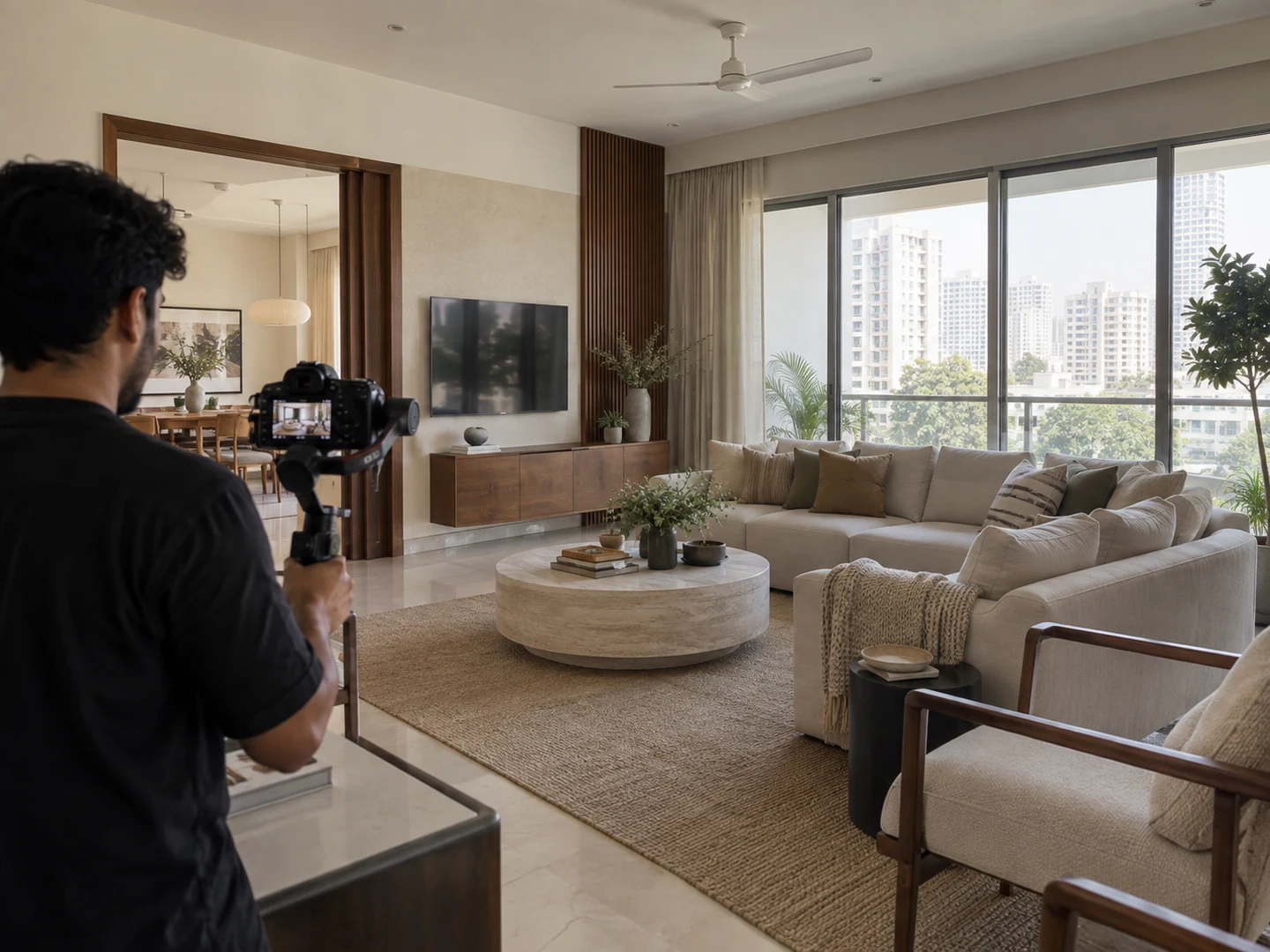
Build the essential list around orientation, movement, and evidence. Viewers need to understand where they are before close-up details become meaningful. Give the crew priority coverage first, then add optional creative variations. This helps preserve a coherent edit if access, weather, or another site condition changes the available shooting window.
| Viewer question | Coverage to discuss | What to verify on location |
|---|---|---|
| What does the building look like? | Exterior establishing view | Correct building and current condition |
| How do I arrive? | Approach and entrance sequence | Approved access and readable route |
| How do the rooms connect? | Linked doorway and interior coverage | Spatial continuity between shots |
| What makes this detail relevant? | Detail plus a wider contextual frame | Installed finish and accurate description |
| What is available outside the home? | Applicable common-area coverage | Current status and filming access |
Adobe recommends recording details such as location, shot type, camera movement, description, and audio in a shot list. Use those fields to make the intended coverage concrete, then add project-specific dependencies. (Adobe, accessed 2026.)
For each essential shot, record the location, its purpose, and any dependency. A lobby shot may depend on cleaning and controlled access. A view from a balcony may depend on light and weather. A spokesperson segment may depend on approved wording and a quiet place to record.
Do not make the list so prescriptive that the crew cannot respond to the location. A useful shot list identifies the information the film needs. The production team can decide how to capture that information well within the agreed creative approach.
How should you plan landscape and vertical coverage?
Plan each required orientation before the shoot instead of assuming the editor can crop every frame later. A wide room view and a vertical feature edit have different composition needs. Ask the crew to identify scenes requiring dedicated coverage and keep graphic placement in mind when people, architectural lines, or key details fill the frame.
List the intended destinations: a project page, a presentation screen, a social feed, or a sales follow-up message. Then agree export requirements with the production team. Keep platform-specific specifications in the delivery sheet so they can be checked when the content is prepared for release.
An editor may reuse the same source footage across formats, but reuse is a creative decision. Cropping can remove the doorway that explains how rooms connect or cut away the view a voice-over describes. Review whether the image still answers the original question after reframing.
Photography also needs a deliverable discussion. Define the spaces, orientations, detail coverage, and intended uses of the selected images. A photograph designed for a website banner may need room for text, while an image used in a sales document may need a clearer descriptive composition.
Connect this planning to a social content plan if the shoot must support a continuing series rather than a single release.
Organise the shoot around dependencies
A practical shoot schedule follows access, light, presentation, and sound requirements as well as the story. The final film does not need to follow the order in which footage is captured. Give the crew enough information to recommend a workable sequence, then ensure the site team knows which spaces must be ready when.
Keep a site contact available to solve access issues and confirm details. Avoid making the camera operator search for keys or chase factual approvals. If a decision changes the agreed brief, record it with the person authorised to approve it instead of relying on a verbal exchange that may be forgotten.
Use a fallback column for vulnerable shots. If an exterior cannot be filmed in suitable conditions, the team may capture interiors while reassessing the schedule. If an amenity remains inaccessible, identify whether approved existing material can support the story or whether that section should be removed. Never substitute unrelated footage as project evidence.
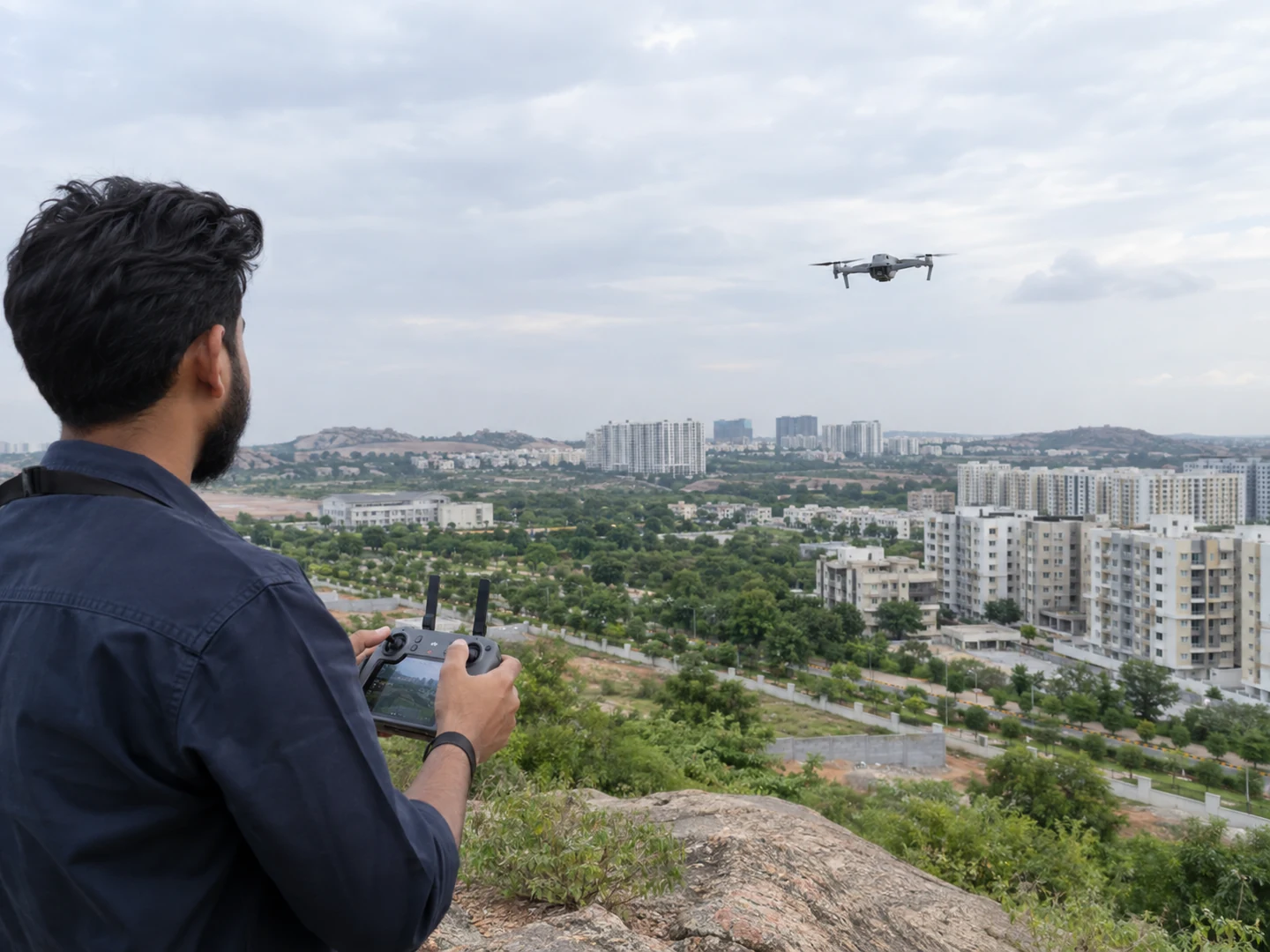
For planned drone and aerial content, let the operator confirm feasibility and applicable requirements. Include ground-level alternatives in the creative plan. Aerial footage should add context, but the entire film should not become unusable if that component cannot proceed.
How should you review the property film against the brief?
Review the first edit for factual accuracy, clarity, and agreed scope before debating small stylistic preferences. A beautiful sequence still needs to identify the project correctly and represent its current state. Consolidated feedback helps the editor distinguish necessary corrections from optional creative changes and avoids conflicting instructions from different reviewers.
Begin with the fundamentals: correct project name, accurate labels, approved claims, current contact details, and appropriate treatment of unfinished spaces. Check that the visual sequence does not imply access, completion, or relationships that the property does not have. Review voice-over and on-screen copy together rather than as separate documents.
Then evaluate the experience. Can someone unfamiliar with the property follow the layout? Are captions readable on a phone? Does the music compete with speech? Is the call to action appropriate for where the film will appear? Watch every agreed format, because a revision that works in one version may need adjustment elsewhere.
Confirm the final delivery list and usage arrangements. Save approved exports in a clearly named location and distinguish them from work-in-progress versions. Keep the approval record with the delivered files so the publishing team can identify exactly what was cleared for use.
Frequently asked questions
Shoot requirements depend on the property, story, access, and agreed deliverables. There is no useful universal package that fits every development. The questions below address common planning choices, but the final production plan should reflect a site review and a shared understanding of what the finished content needs to accomplish.
Does the entire property need to be ready before filming?
Only the agreed filming areas need to be available, but the content must represent their status accurately. Confirm the route between those spaces and any background visible on camera. If the development is unfinished, decide how the film will distinguish completed areas, show spaces, and construction activity.
Can photographs be captured during the same shoot?
They can be planned together when the schedule, crew, equipment, and brief support both. Confirm photography as a distinct deliverable before booking. Dedicated still photography involves its own composition and selection process, so do not assume that frames extracted from the film will satisfy every intended use.
Should the film include someone speaking on camera?
Use a presenter or spokesperson when their explanation helps viewers understand the project. Confirm the speaker, approved talking points, language, and recording conditions in advance. If the property can communicate the message through visuals and concise text, a presenter may be unnecessary. Let the content objective decide.
Make readiness visible before shoot day
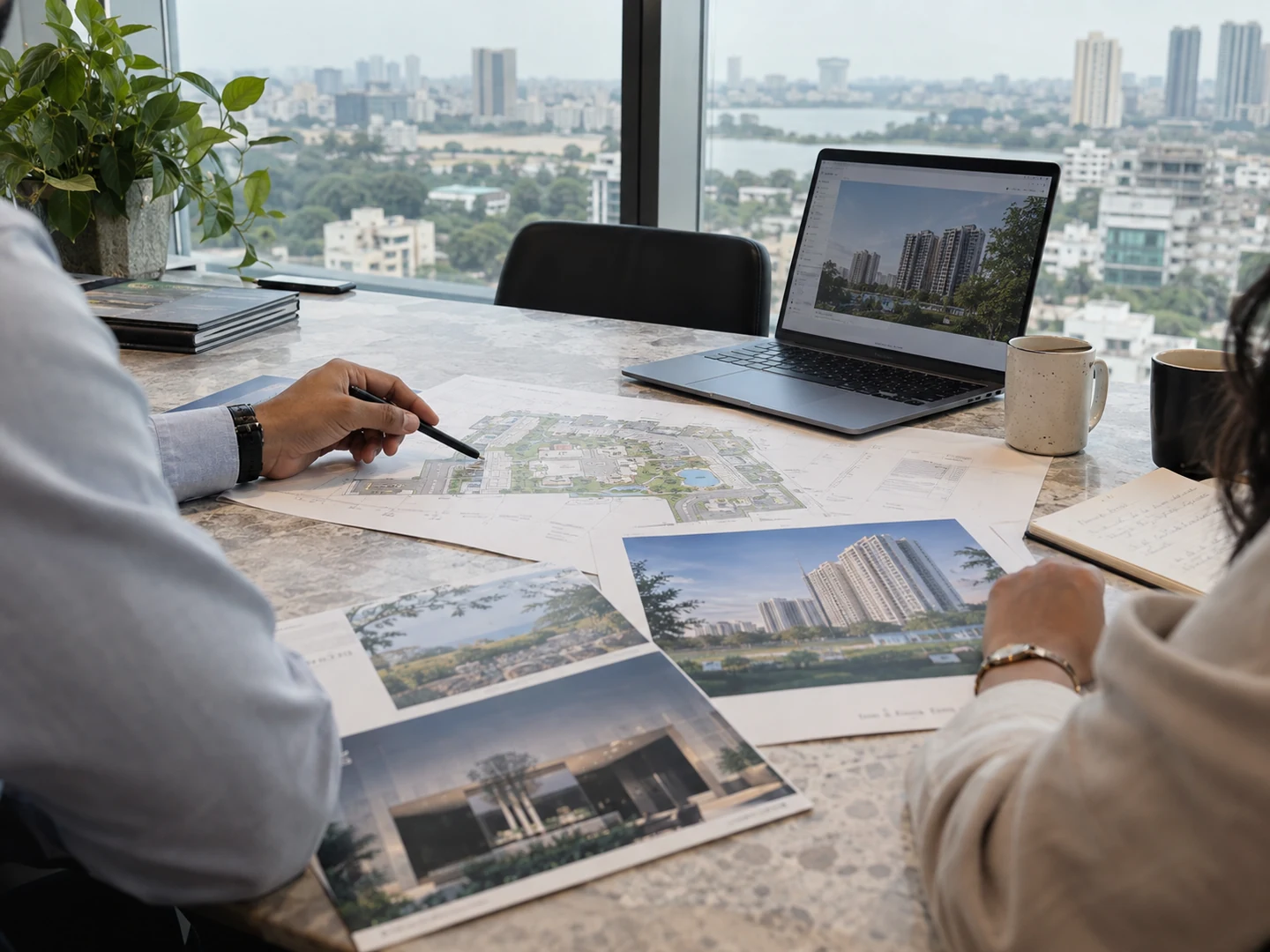
Bring the site contact and production team together to review the essential list, access arrangements, and unresolved dependencies. Mark each item as ready, awaiting action, or excluded, and give outstanding actions a named owner. That simple record is more useful than a general assurance that everything will be ready.
Once the site and brief align, the crew can spend its attention on the images and story. The final check is straightforward: the agreed spaces are available, the facts are approved, the formats are planned, and everyone knows who can make decisions. Use that checklist to confirm readiness before production begins.